Mohamed RagabAI & Digital Construction Engineer
Training AI to read the built environment.
I am a structural engineer who builds AI. I train computer-vision and point-cloud models on site photos, structural drawings and laser scans, process the data behind them, and deploy them through cloud pipelines into BIM models and digital twins that engineers can check and sign off. Where benchmarks and site data disagree, I trust the site.
- Now
- Co-founder & CTO, AECAI · R&D AI-Construction Specialist, AGECS
- Before
- Structural & façade design engineer, National Consulting Engineers (US) · AECOM × Ulster industry project

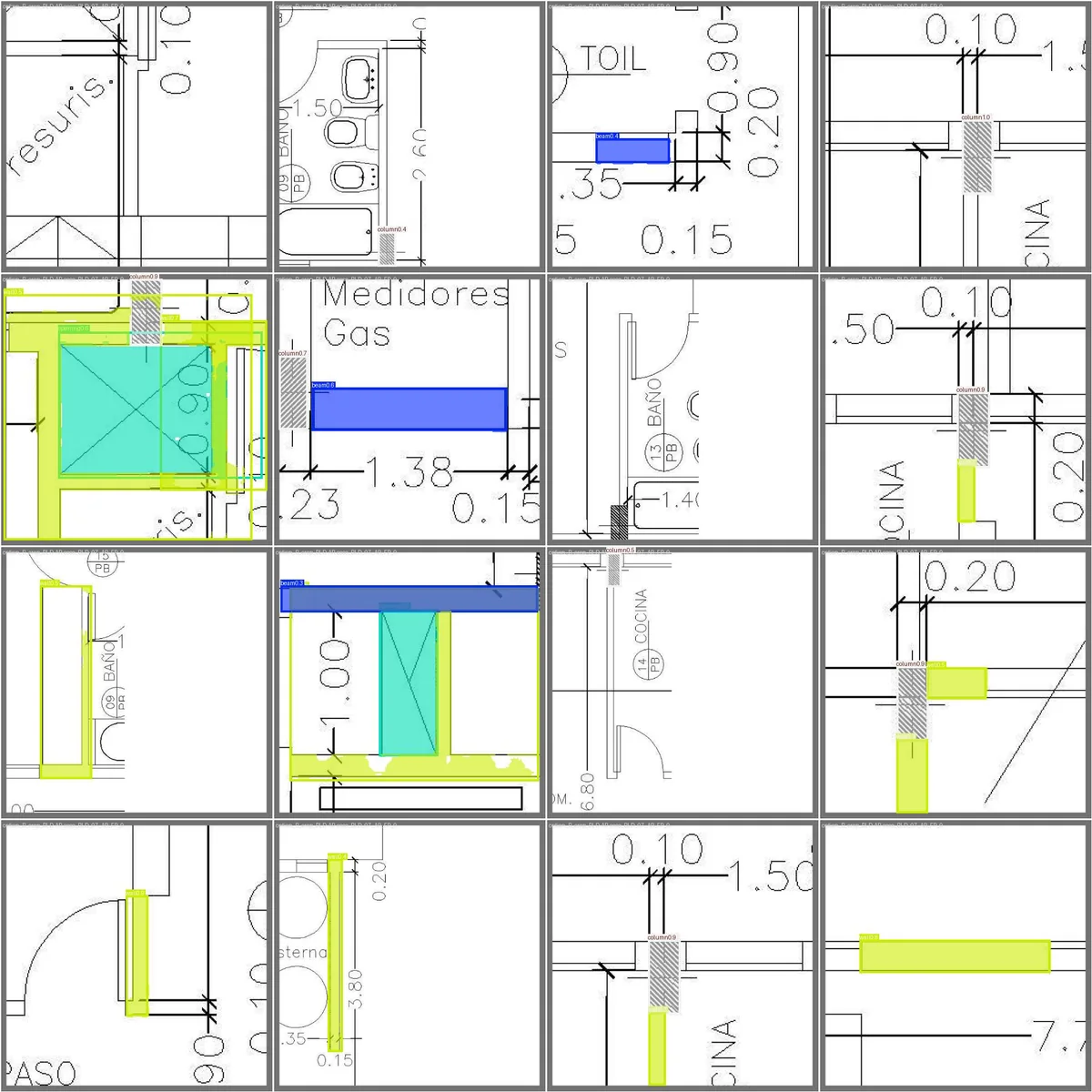
Real plans (public BLD-ST dataset) and real model predictions. Plans stacked one storey apart; the 3D is a simple extrusion of the detections.
- Distinction
- MSc Digital Construction Analytics & BIM
- Ulster University, 2025
- 0.933
- Field recall on real site photos
- YOLO11x-seg · 44 manually verified industry images
- 0.941
- mAP50: column detection on plans
- YOLOv8m-seg · P 0.944 · R 0.935
- 115+
- Structural & façade design packages
- National Consulting Engineers, 2023–24
Scan-to-BIM · real data
From a 250-million-point scan to an IFC model.
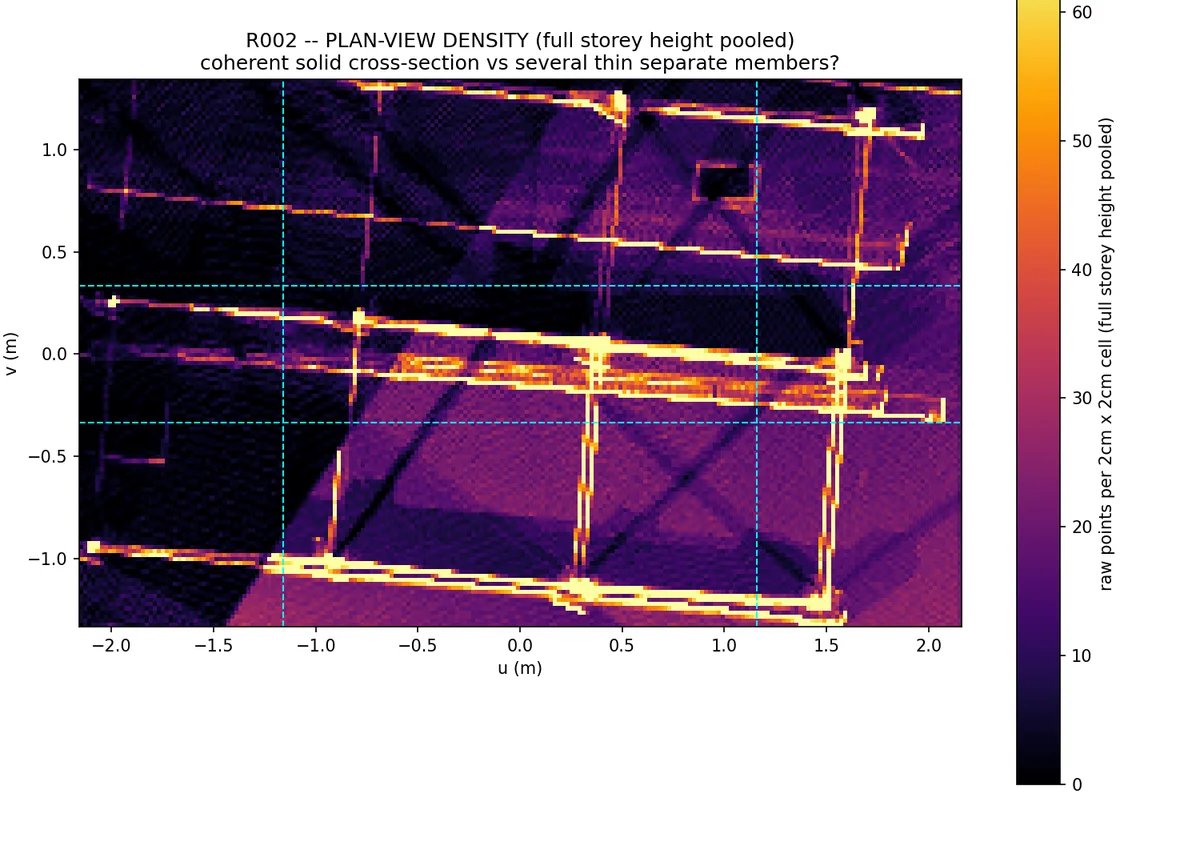
A real laser scan of Kladno railway station, and the IFC model my pipeline produced from it, shown in the same coordinates. Every wall, slab and window is backed by the points around it.
- 250.5 M
- Points in the scan
- Kladno station benchmark
- 190
- IFC walls extracted
- 12 slabs · 10 windows · 1 roof
- 79%
- Of sampled points
- support an IFC element
- 3
- Storeys
- L0 · L1 · L2

Real scan (public Kladno station benchmark) and my final IFC output, shown in their shared coordinates.
AI lifecycle
From raw site data to deployed models.
Most of the work in construction AI happens before and after the model. I run the whole loop: engineering the data, training and testing the models, deploying them in the cloud, and wiring the results into BIM and digital twins.
- 8
- Model architectures trained
- YOLOv8x · YOLO11x · YOLO11n · YOLOv8m-seg · U-Net (ResNet-50) · FPN–EfficientNet-B4 · PointNet++ · VGG16
- 3
- Data modalities
- Site photos, structural drawings and laser-scan point clouds
- ~264 M
- Points processed in one scan
- 7.7 GB PLY, single storey, to verified IFC
- 21,009
- Training tiles engineered
- Unified from six public plan datasets, 8 classes
Stage 01 of 05
Data engineering & processing
Most of the accuracy is decided here: sourcing, converting, tiling, cleaning and checking the data before a model sees it.
- 209,504 wall and 1,734 beam instances unified from six public sources, with custom SVG→COCO and rect→COCO converters and MD5-verified copies
- A ~264 M-point, 7.7 GB site scan cleaned and classified into structural elements
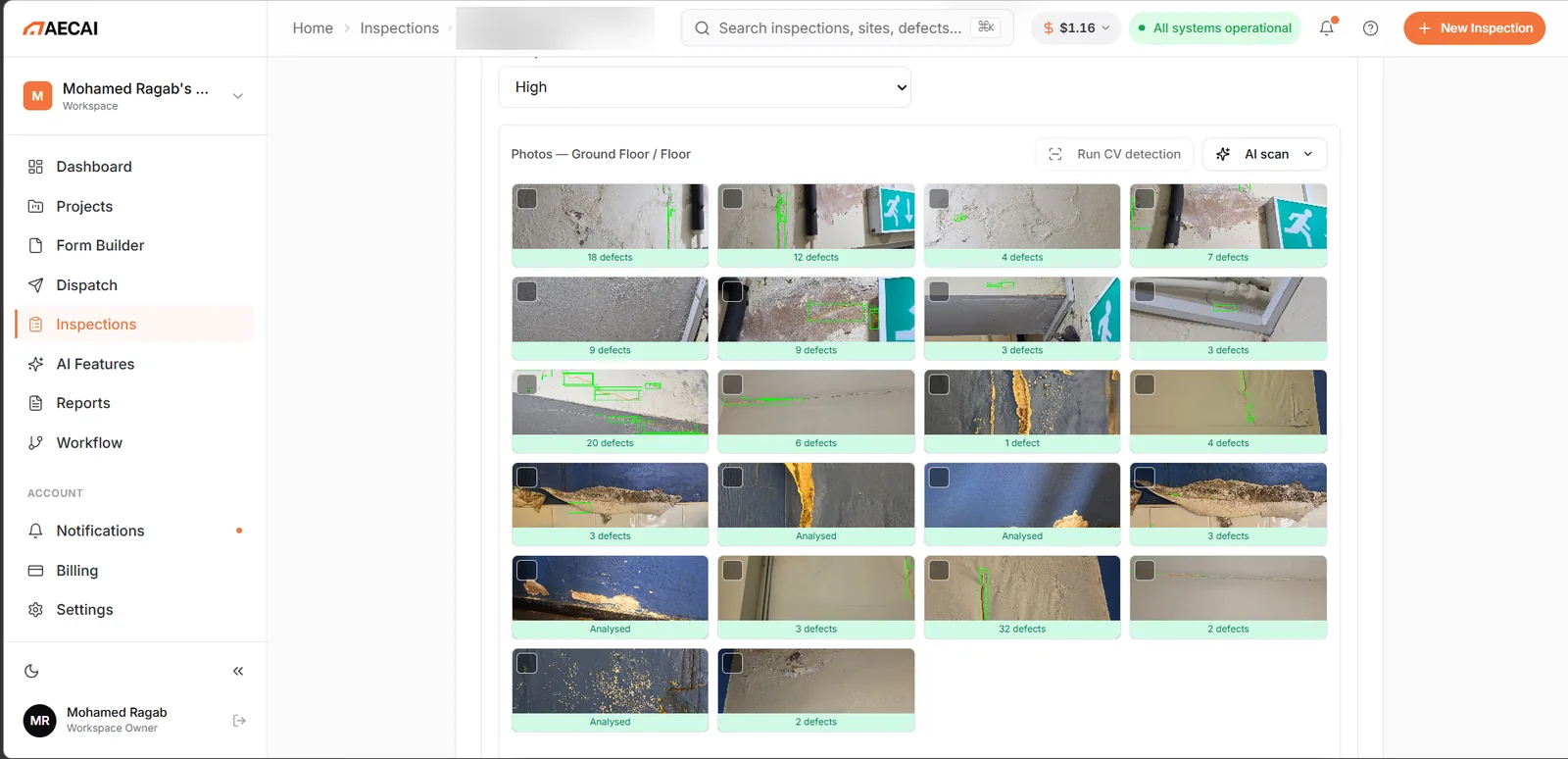
- 689 industry site photos through the full detection and reporting pipeline in 27 min
- Annotation QA in CVAT: 251 instances and 918 polygon vertices on a single sheet
Systems map
From engineering data to decisions an engineer can sign off.
Four kinds of input, four method families, four outcomes. Pick a project, or hover a step, to trace the route it takes.
Engineering data in
Site & inspection photos
Methods
Detection & segmentation
Outcomes out
Engineer-reviewed findings
Trace a project
Computer vision · Structural health monitoring
Multi-defect concrete inspection with deep learning
- 0.807
- Box mAP50
- 0.630
- mIoU (F1 0.775)
Live evidence
Three models, one real site photo.
On the curated benchmark these detectors scored within 0.02 mAP50 of each other. On site they behave very differently. Switch models and drag the divider.
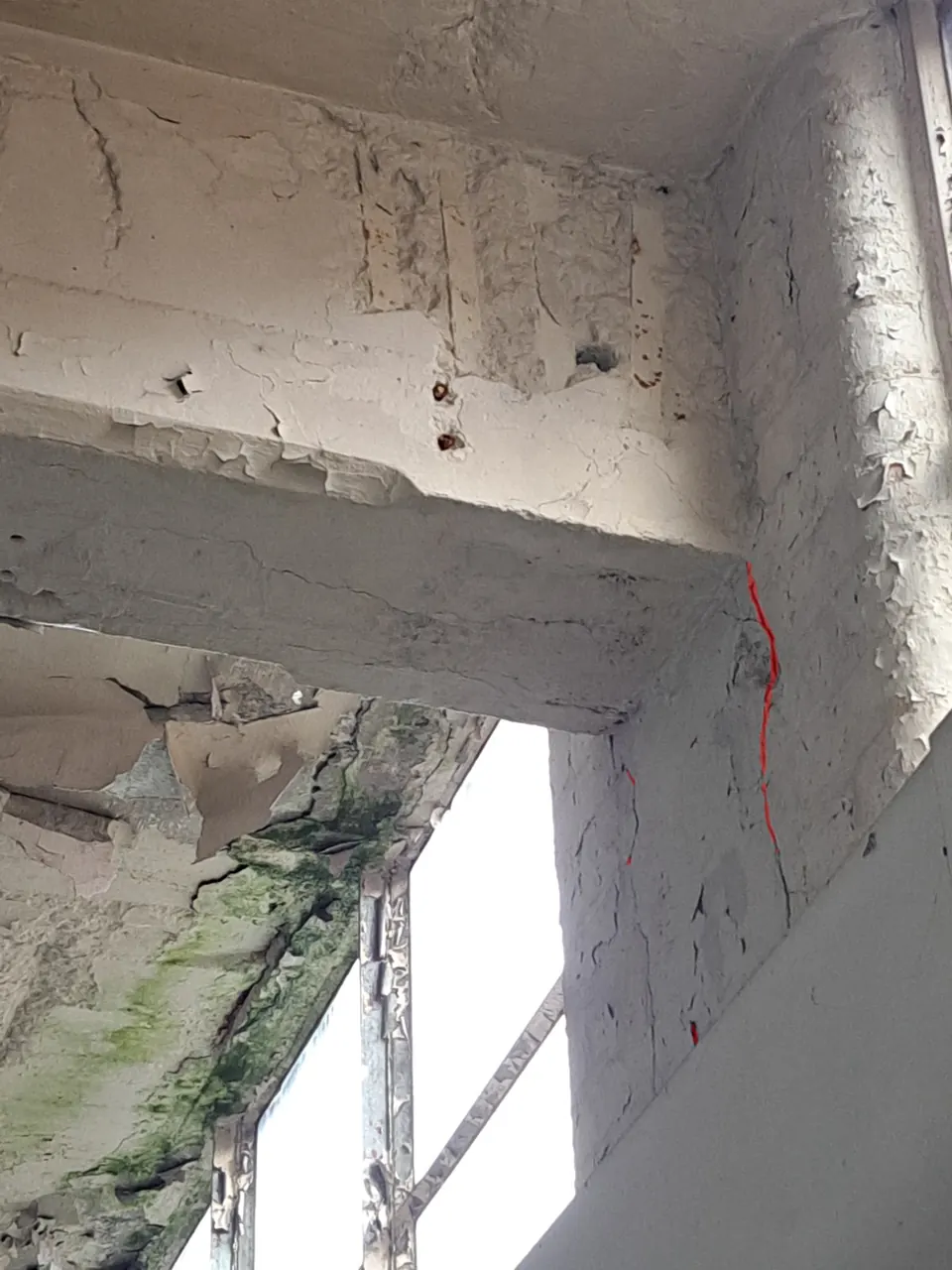
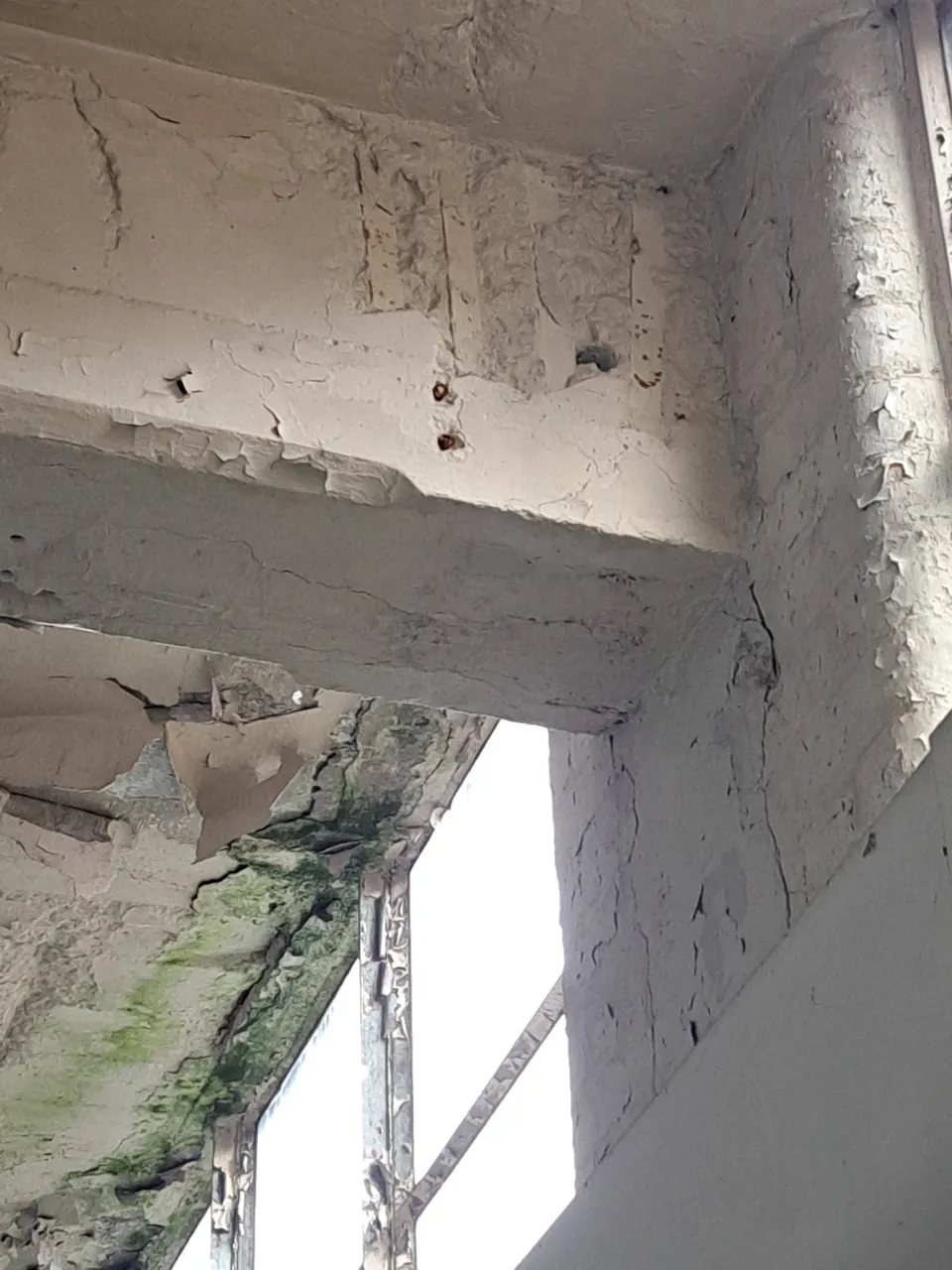
What to look for
Beam soffit by a window
YOLO11x-seg marks the window mullions; U-Net keeps to the crack on the beam.
Real outputs from the dissertation's external validation on industry site photographs (Belfast). Drag the divider or use the slider to compare with the untouched input.
Digital twins & BIM Level 3
From federated files to live, connected models.
BIM Level 2 is coordinated files under ISO 19650. Level 3 is one open, cloud-connected model that live data flows into. My Brinell project was a full BIM Level 2 delivery, my MSc covered BIM Levels 2 and 3 and digital-twin workflows, and these are the Level 3 building blocks I already build.
- Reality capture
- AI recognition
- Open BIM (IFC)
- Digital twin
- Engineer decision
Beyond the model
BIM, digital twins, automation and cloud.
A detector on its own changes nothing on site. These are the parts that put results in front of engineers and asset owners, all taken from my own project files.
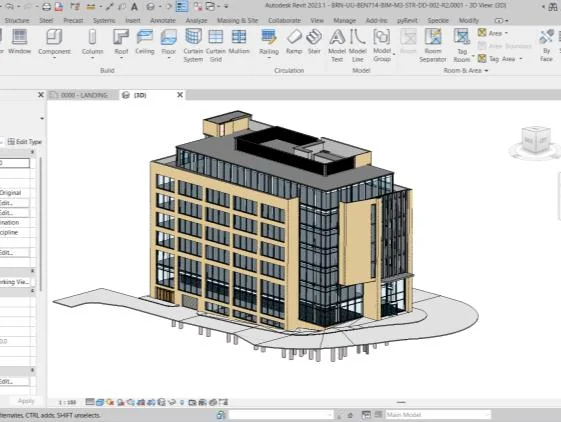
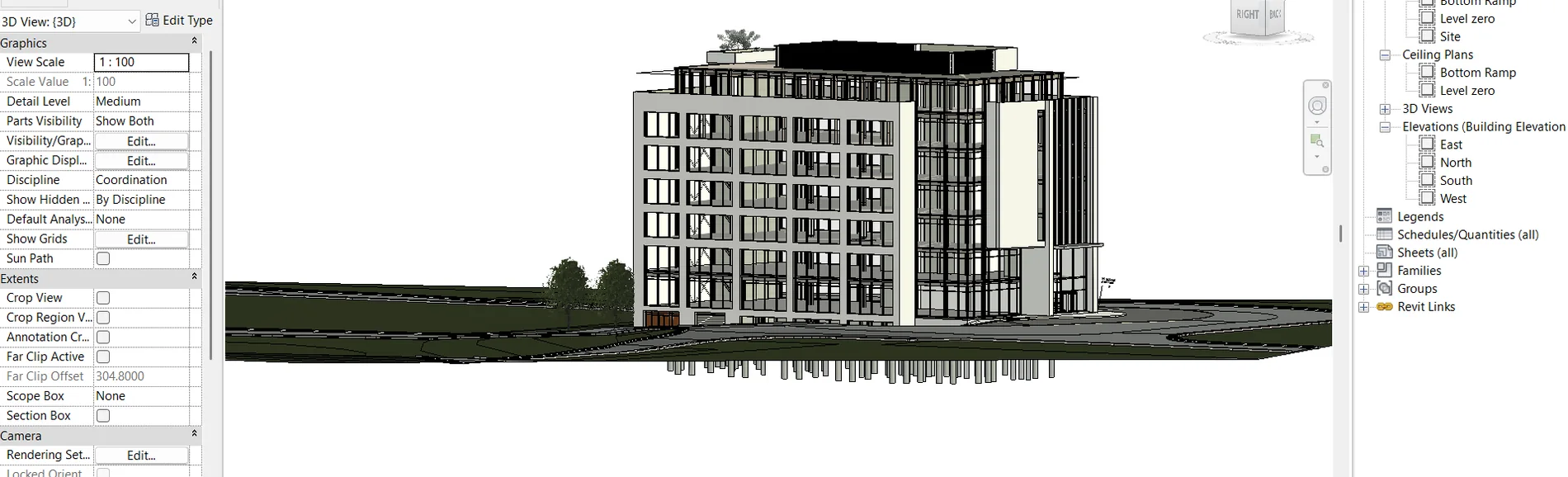
Architectural model in Revit.
BIM models & coordination
Federated Revit models, clash-checked in Navisworks.
The Brinell Building (BEN714): architecture, structure and MEP modelled in Revit from 2D PDF drawings, basement to level 7, then federated and clash-checked in Navisworks. Files follow an ISO 19650-style naming convention, and the project was run against EIR and BEP templates.
- 3
- Federated discipline models
- B1–L7
- Levels rebuilt from PDF
- 73%
- Module mark (BEN714)
Selected work
Six case studies, each traced to its source files.
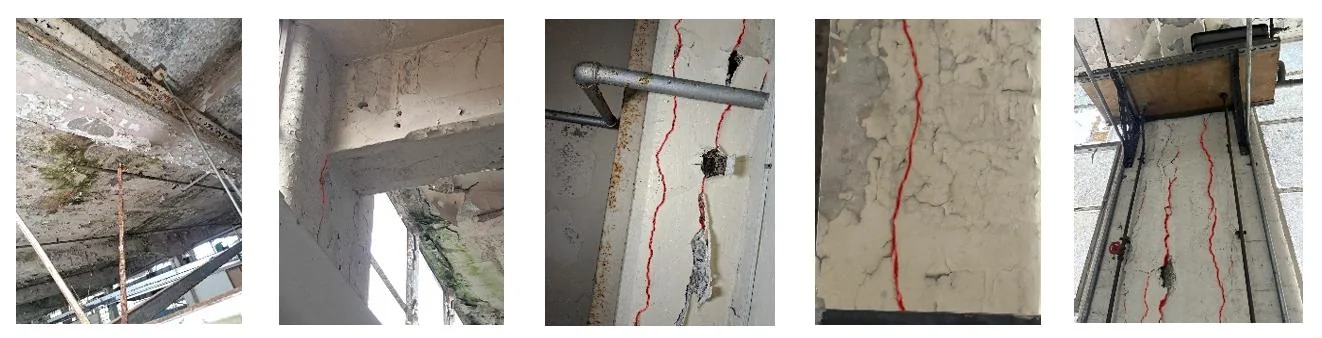
Research, a product, applied R&D and industry projects. Each one follows the same arc: the engineering challenge, the input data, the workflow, the result and why it matters.
Why it matters
The industry need is real, and adoption is still early.
21 inspection and engineering professionals, UK, KSA, UAE and Egypt. MSc dissertation §4.1.
- 4–7 days
- to inspect a medium-sized building by hand
- 9%
- had used computer-vision tools in their work
- ~75%
- were open to adopting them
What I bring
AI depth, BIM fluency and structural judgement in one person.
Most AI for construction is built by engineers without ML depth, or by ML teams without site knowledge. My work sits in the overlap: from data and models to cloud, BIM and digital twins.
Computer vision & deep learning
Detection and segmentation models for concrete defects and structural drawings: cracks, spalling, exposed rebar, 18-class bridge deterioration, and columns, beams, walls, openings and piles on plans. Validated on noisy site data, not only on benchmarks.
ML engineering & data processing
I build the datasets as well as the models: format converters, tiling, annotation QA and hash-verified copies, and pipelines that process a 264 M-point scan or hundreds of site photos in one run.
Cloud & MLOps
Models served as serverless GPU workers behind a web product, with versioned weights, a cloud database and push-to-deploy for both the app and the workers.
BIM, digital twins & BIM Level 3
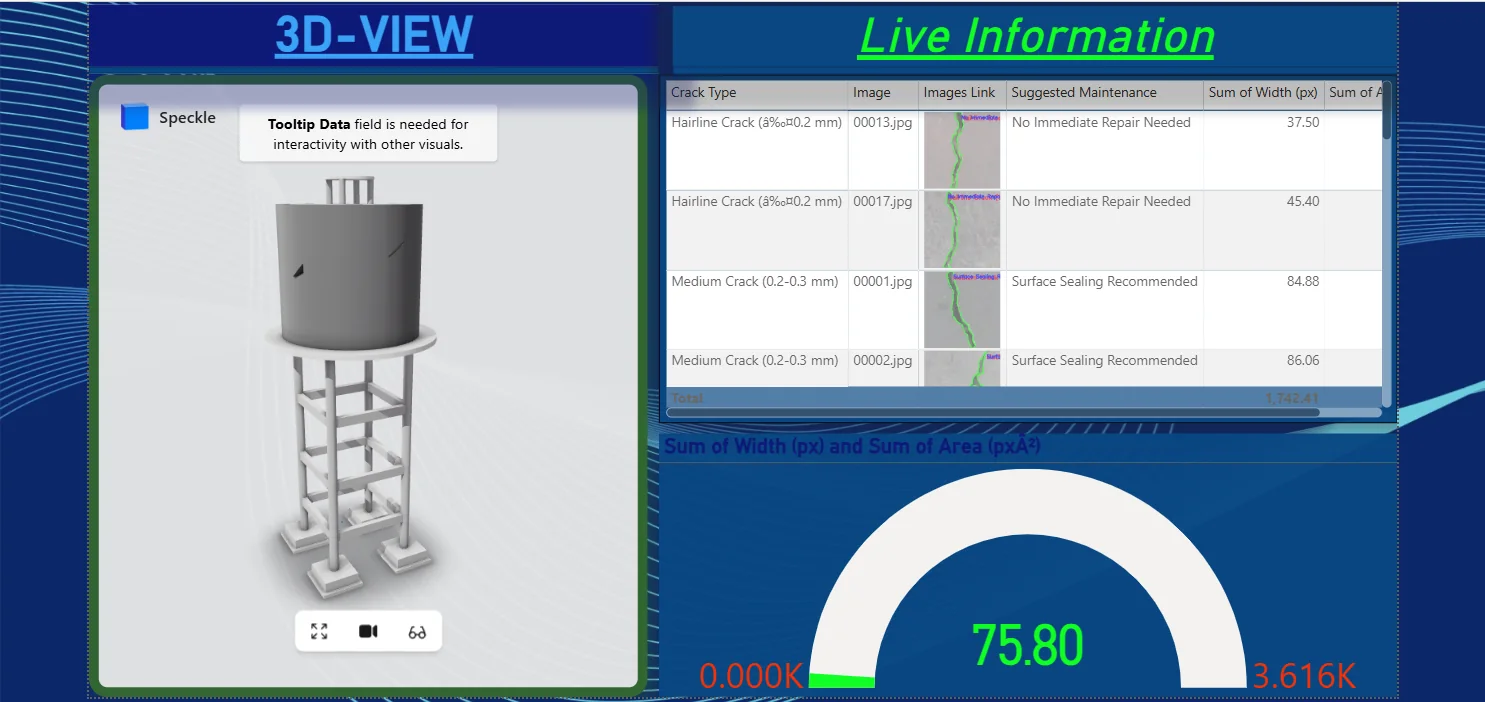
Federated Revit models and clash coordination under ISO 19650, Power BI twins that carry live condition data, and Scan-to-BIM that writes open IFC: the building blocks of BIM Level 3.
Generative AI & agentic workflows
I evaluate multimodal LLMs on engineering drawings and document their failure modes, integrate them into products (an optional Claude or Gemini scan in AECAI), and build with AI coding agents under engineering review.
Structural engineering judgement
Before this work I delivered a year of structural and façade design packages to AISC, ASCE, ACI and the Florida Building Code. That practice shapes what I ask my models to measure and flag.
Why field testing matters
The benchmark picks one detector. The site picks another.
On 44 manually verified site photos, YOLO11x-seg correctly cleared 13 crack-free images. YOLOv8x-seg cleared only 1, even though its benchmark mAP50 was slightly higher. That result decides which detector goes into a product.
Read the full study →Field validation on 44 real site photos
Image-level results after manual verification (15 cracked, 29 crack-free).
- Recall
- Precision
- Accuracy
YOLOv8x-seg matched YOLO11x-seg on recall but flagged 28 of 29 crack-free images, mostly pipes, shadows and coatings.
View data table
| Category | Recall | Precision | Accuracy |
|---|---|---|---|
| YOLO11x-seg | 0.93 | 0.47 | 0.61 |
| YOLO11n-seg | 0.67 | 0.33 | 0.43 |
| YOLOv8x-seg | 0.93 | 0.33 | 0.34 |
Source: MSc dissertation (Ulster University, 2025), Table 7
Programme
Career, laid out like a construction programme.
Education, engineering practice and AI work, running in parallel. Select a bar for details.
AI & digital
AECAI · CTO
Inspection AI platform, model to product
- 2026
- 2025
- 2025
- 2025
- 2024
- 2023
Engineering
National Consulting Engineers
115+ structural & façade design packages
- 2023
Engineering
DME
Planning internship: Primavera P6, BOQ
- 2021
Engineering
Redcon
Site internship: piles, slump tests, load tests
- 2024
- 2018
Education
BSc Civil Engineering
Higher Technological Institute · GPA 3.24 · graduation project A+
Research & education
A Distinction MSc, with research grounded in industry.
MSc dissertation · September 2025
Towards Digital Transformation of Structural Health Monitoring (SHM): Comparative YOLO and U-Net Deep Learning for Multi-Defect Detection
The dissertation benchmarks three YOLO-seg models and a U-Net (ResNet-50) for crack segmentation, and an FPN–EfficientNet-B4 for 18-class defect segmentation on DACL10k. The models are validated on industry site imagery and set against a 21-respondent practitioner survey. U-Net gave the most accurate crack masks, YOLO11x-seg the most robust field detection, and the multi-class model broader coverage, which together support a hybrid inspection pipeline integrated with BIM and digital twins.
A journal manuscript based on this work, focused on field robustness, is in submission (Built Environment Project and Asset Management, Emerald).
- Distinction
- MSc classification
- 81%
- Intro to Data Science
- 80%
- Industry Project (AECOM)
- 21
- Practitioners surveyed
Contact
Building something for the built environment? I would like to hear about it.
- AI / Computer Vision Engineer
- Digital Construction & BIM
- AI & Technology Consulting
- Structural-Digital Innovation
I am open to roles in AI and computer vision, digital construction and BIM, and technology consulting. Email, phone or LinkedIn all reach me directly.